by Jazra Khaleed translated from the Greek by Jason Rigas
10.
now you’re tweeting the coast guard’s sinking ships + elytis your aegean stinks like greece
a neverending tragedy in
o amaranth sea I yearn to hear your whispers
how many dead bodies get you the nobel
news: turks insist that coast guard attempting to divert migrants in the aegean
replying to @primeministergr let’s not forget how many people drowned in the aegean because of when you said that there are no borders at sea not to mention how many people got stuck here even though they wanted to get to europe
basking in the locals’ genuine hospitality
frontex documents confirm what refugees have long since claimed: the coast guard fired at boats carrying #refugeesgr
if we just let a bunch of sharks loose in the aegean they’d sink their boats for sure
die maggots die
the local hospitality and the breathtaking scenery are what memories are made of
if there’s love in your heart you can only give love #refugeesgr
RevolvingDoors, a poem in 36 parts, follows, with some deviations, the structure of Nanni Balestrini’s Blackout (Rome: DeriveApprodi, 2001).
Barricade is publishing the first 16 poems in the series on our web forum Ramparts throughout the month of August; the full 36-poem sequence will be available as a print zine in September 2024.
Revolving Doors will be also be featured in THE LIGHT THAT BURNS US, an expanded anthology of Khaleed’s work forthcoming from World Poetry Books on October 10. Pre-order at worldpoetrybooks.com.
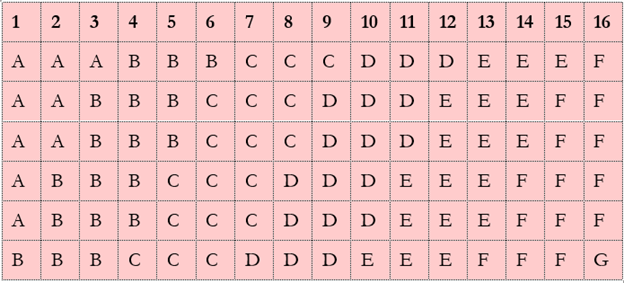
Below is a list of sources used in this cut-up and the pattern of their usage.
A) Odysseas Elytis, The first sun (Athens: Ikaros, 1996).
B) Giorgos Stamatopoulos, “Aegean sea,” www.efsyn.gr, 2 February 2020; Heinrich Hall, “Winds blowing,” www.kathimerini.gr, 30 June 2018; “The islands of the Northwestern Aegean,” www.ελληνικανησια.com; Peris Halatsis “Aegean: the beauty of the islands on the non profit line,” www.now24.gr; “Eastern Aegean,” www.athinorama.gr; “Maritime tourism,” www.aegeanislands.gr; “Poetry about the Aegean,” www.aegeanislands.gr
C) Articles from www.kathimerini.gr. Giannis Souliotis, “Patrols block off Aegean,” 6 May 2020; Giannis Souliotis “Concerns of migrants ‘disembarking’ on the islands,” 14 April 2020; Giannis Souliotis, “Migrant crisis: Interceptions curtailing entries,” 14 March 2020; Giannis Souliotis, “Turkish border patrol announces it will ban migrants from attempting to cross the Aegean,” 7 March 2020; Giannis Souliotis, “A culture of ‘aggressive surveillance’ in the Coast Guard,” 4 March 2020; Giannis Souliotis, “As of yesterday, Coast Guard and Police on alert,” 29 February 2020; Giannis Souliotis, “Migrants causing chaos on the islands,” 11 August 2015; Giorgos S. Bourdaras, “Coast Guard apologizes for Farmakonisi,” 30 January 2014; Giannis Elafros, “Shocking accounts from refugees regarding Farmakonisi,” 24 January 2014.
D) Tweets posted between 1 March 2015 and 1 September 2018 with the keywords “Aegean” and “immigrants.”
E) All poems by Arab-American poets published in Teflon. Zeina Alsous, “In Paris, an Arab Girl Enters the Museum,” no. 24, 2021, p. 61. Safia Elhillo, “Application for the Position of Abdelhalim Hafez’s Girl”, no. 22, 2020, p. 92; Hala Alyan, “Maktoub,” no. 14, 2016, pp. 86-87; Safia Elhillo, “Vocabulary,” ibid., p. 97; Lisa Suhair Majaj, “Reunion,” no. 10, 2014, p. 89; Lisa Suhair Majaj, “Shards,” ibid., pp. 92-93; Lisa Suhair Majaj, “Olive Trees,” ibid., pp. 92-93; Lisa Suhair Majaj, “This Is Not a Massacre,” ibid., p. 96; Lisa Suhair Majaj, “Arguments,” ibid., p. 97; Lisa Suhair Majaj, “These Words,” ibid., pp. 98-99; Lisa Suhair Majaj, “The Coffin Maker Speaks,” ibid., pp. 100-101; Lisa Suhair Majaj, “Practicing Loving Kindness,” ibid., pp.102-103; Mohja Kahf, “Voyager Dust,” no. 9, 2013, p. 9; Mohja Kahf, “The Cherries,” ibid., pp. 10-12; Mohja Kahf, “The Fires Have Begun,” ibid., p. 15; Mohja Kahf, “The Marvelous Women” ibid., pp. 20-21; Mohja Kahf, “Men Kill Me,” ibid., p. 24; Suheir Hammad, “First Writing Since,” no. 8, 2013, p. 8; Suheir Hammad, “Dead Woman,” ibid., p.10; Suheir Hammad, “Children of Stone,” ibid., p. 15; Suheir Hammad, “Broken and Beirut,” ibid., pp. 16-17; Hind Shoufani, “Headlines,” no. 6, 2012, pp. 92-93.
F) Tweets posted between 1 March 2015 and 1 September 2018 with the keywords “Syria” and “immigrants.”
G) Various, Nearly invisible: the illegalization of labor as official immigration policy, Athens: Antifa Scripta, 2013.
Greece’s Aegean Sea, dotted with islands, is one of the world’s most popular tourist destinations. It is also a maritime mass grave. Over the last two decades, thousands of migrants have drowned attempting to sail across the border into Greece. Indeed, it is the Greek state, always attuned to geopolitical fluctuations and largely motivated by European Union funding, that controls the flow of migration, often opening up the border, ever so slightly, before tightly sealing it again.
“Pushbacks” are common. This is when the Hellenic Coast Guard, or groups of non-state actors who patrol the Aegean, intercept migrant boats approaching island beaches, often sinking them. Any migrant who does manage to reach the shores of Greece is incarcerated, forced to live in appalling conditions—in what are, essentially, concentration camps—beaten, and used as cheap labor. Every year, Greece receives hundreds of millions of Euros from the European Union for the express purpose of continued border surveillance and migrant-camp upkeep. These funds are dispersed throughout Greece and trickle down into every corner of Greek society, from the military, to police, to camp staff and provisioners, to local employers who exploit migrant labor.
In the 1990s, the Eastern Bloc collapsed and Greece became a host country for migrants, mostly from within Europe. Today, most of the migrants who arrive in Greece are from the Middle East and Africa. Since then, however, Greece has maintained a “revolving door” policy toward migration, a policy that dictates that migrants are illegal and thus devalues their labor. Migrants in Greece are deliberately left undocumented and work for meager wages in dehumanizing workplaces until they are eventually rounded up by police, beaten, incarcerated, and deported. Many deportees return, and the process of illegalization and exploitation begins anew.
This is what these poems are about. They are from a longer piece of mine titled Revolving Doors, a cut-up in which excerpts from poems, tweets, journalistic articles, and an antifascist publication about the illegalization of migrant labor are spliced together, following a specific sequence/structure that is outlined at the end, alongside a list of the texts that were used for the construction of the work. The verses sometimes complement and sometimes contradict one another. They sometimes embrace and sometimes push back against one another. Without warning, the prosodic flow is halted, exposing the violence of Greek state policy and the culpability of Greek society.
As a whole, Revolving Doors consists of thirty-six poems of fifteen lines each. The first sixteen are presented here in Barricade’s Ramparts web forum.* The remaining twenty poems are about migrant revolts in the camps, a proud multiethnic proletariat, antifascist demonstrations, and the actions of locals and migrants alike against the state and the bosses:
without a moment’s notice the new proletarian barbarians might appear at the city’s main gate
after a long, terrible, historic travail
creating something entirely novel and unpredictable
because the future, from the working class point of view, does not exist
Revolving Doors is also featured in my 2020 book But Is This Poetry?, published in Greece by Teflon Press. The English translation will be included in The Light That Burns Us, another book of my poems that will be published in November 2024 by World Poetry Books. I am grateful to Jason Rigas for his translation and to Barricade for publishing the English version.
Jazra Khaleed June 2024
translated from the Greek by Jason Rigas
*The first 16 poems will be published serially on Ramparts throughout the month of August; the complete 36-poem sequence will be available as a print zine in September 2024.
Hiba Abu Nada, a Palestinian novelist and poet, and winner of the Sharjah Prize for her novel Oxygen is Not for the Dead, was killed by Israeli airstrikes at her home in Gaza on Oct. 20. She was just 32 years old. The poem below, written by Angolan poet and journalist João Melo, alerts us to the brevity and precarity of the moment, after an act of violence occurs and before the official narrative of that violence is written, how we are obliged to speak in that moment the truth and reality that we know.
Urgent: News of the Death of Hiba Abu Nada
João Melo translated from the Portuguese by G. Holleran
Excuse my urgency, oh right-thinking beings especially you translucent and self-referential poets, but one of our sisters, the Palestinian poet Hiba Abu Nada, has just died in Gaza under the shrapnel of a benevolent bomb, sent by another God, different from the one she spoke with every day.
I hesitated to convey this fateful news so hastily. Perhaps I should wait for the leaden grey smoke from the bomb that killed her to dissipate, while she, surely, scrutinized the sky for a sliver of light and maybe even the last birds. Or, more convenient yet it’d be better to say nothing, until today’s hegemonic oracles, like all oracles, circulate an official statement denying it as usual without any doubts or uncomfortable questions.
But when I read the last words of Hiba Abu Nada before she died, I was moved to spread this news, before her banner could be censored by those who defend selective liberty:
“If we die, know that we are content and steadfast, and convey on our behalf that we are people of truth!”
João Melo, born in 1955 in Luanda, Angola, is an author, journalist, and communication consultant. He is a founder of the Angolan Writer’s Association, and of the Angolan Academy of Literature and Social Sciences. His works include poetry, short stories, articles, and essays and have been published in Angola, Portugal, Brazil, Italy, Cuba, the United Kingdom, and the United States. His writings have been translated into English, French, German, Arabic, and Chinese. He was awarded the 2009 Angola Arts and Culture National Prize in the literature category.
Grace Holleran is a writer, translator, and member of Barricade‘s editorial collective.
Get Involved
To read Barricade’s statement in solidarity with Palestine in response to the last escalation by Israel in 2021, click here.
For updates on local actions and demonstrations, we recommend checking the social media of local Palestinian advocacy organizations. For on-the-ground coverage in Gaza, we recommend Middle East Eye, Jewish Voice for Peace, and Motaz Azaiza. A list of other Instagram accounts can be found in the caption of this post. While social media gives visibility to the immediacy of the conditions in Gaza not shown in mainstream media, these accounts are also subject to censorship by Meta, so watch this space for updated links.
Some useful resources for education on Palestine’s history are Jadaliyya’s comprehensive reading list from 2021 and their currently-running Gaza Teach-in series (which can be accessed here along with other recent posts on Palestine), and Decolonize Palestine.
Country of Words is a rich resource for Palestinian literature, a re-mapping of Palestine’s literary history from a global perspective.
If you have the resources, consider donating to the Palestine Children’s Relief Fund, Medical Aid for Palestine’s urgent appeal, and Pal Legal (which gives protections to those losing their livelihoods for speaking out).
We urge readers in the United States to call and write their Congress representatives and demand they stand for a ceasefire.
Bilingual poet and scholar Patrick Sylvain’s book-length collection of English/Haitian Creole poems — Unfinished Dreams / Rèv San Bout — from which the following sequence is drawn “investigates the unrealized personal and sociopolitical aspirations of Haitians, both at home and in the diaspora,” writes Sylvain. The motivating figure that limns and permeates these poetic reflections is the “unfinished.” Through it, Sylvain elaborates a range of historical, political, social, ecological, and formal poetic claims and wagers. The Haitian Revolution (1791–1804) — an impertinent attack on global capital for which, Sylvain explains, the Haitian people continue to be punished — haunts this work, as a paradigmatic forbearer of all that remains to be done. Utilizing a wide array of formal constraints and poetic conceits gleaned from a variety of literary and cultural traditions, Sylvain is writing against enforced and encrusted ideas of prestige and class that obstinately attach to Haitian Creole as a language of aesthetic and intellectual production.
The following poems are interspersed with excerpts from Sylvain’s essay “Bilingual Existence and the Portals of Translation.” Listen to Sylvain reading his poems in both languages on the barricade/ramparts SoundCloud.
More selected poems from Unfinished Dreams / Rèv San Bout will appear in Barricade’s forthcoming Summer 2021 issue, where Sylvain will discuss his poetic engagement with historical and contemporary Haitian life.