
76 Years Later: A Documentary Nakba
Syllabus for a Reading Group for Archival Liberation in and beyond Palestine
by J.J. Ghaddar & James Lowry1
In speaking of a “documentary nakba,” we are likewise speaking of the physical, social, political and cultural ills that accrue from a sustained campaign of theft and destruction by Israeli belligerents of records . . .
João Melo’s poem “Urgent: News of the Death of Hiba Abu Nada” illuminates that moment between the act and the narration of the act, in which forces conspire to distort, deny, and erase; to establish discursive control. As archivists, scholars of the archive, we know that problem well. Historically, the destruction of records, the theft of cultural property, the denigration of languages, memory practices and epistemologies have been key tools of colonialism, and we are seeing those same tactics in use in Palestine today. Accompanying the massacres of Palestinians, the cultural dimension of genocide is also at work: European settlers adopt nativized names, they speak a resurrected language in place of their European tongues, and as the texts listed in this syllabus attest, they steal, obfuscate, and destroy the archives that tell the history of Palestine and its people.
When Constantin Zurayk used the term “nakba” to describe the Zionist horrors of 1948, he was speaking expansively of a catastrophe that was physical, social, political, and cultural. 2 In speaking of a “documentary nakba,” we are likewise speaking of the physical, social, political and cultural ills that accrue from a sustained campaign of theft and destruction by Israeli belligerents of records, with all their historical and juridical force, and other artifacts of culture with all of their affordances.
It is with an understanding of the powerful work that culture does in the project of genocide that we offer a syllabus for the study of the Palestinian archive under Zionist aggression. Scholars, students, activists, archivists, and others are meeting to study these texts together between February and May 2024. We study the Palestinian archive to perpetuate it: Zionist ambitions will not be fully realized if the knowledge in these texts—the knowledge of what has been lost, documented in these texts—is repeated from one of us to another.
This is no substitute for action against the bloodshed, but the texts listed here inform such action and impel us to it.
The basis of unity for our reading group is the 2023 Statement on Gaza issued by Librarians and Archivists for Palestine, and endorsed by the Middle East Librarians Association and other organizations. The readings have been selected from the Librarians and Archivists with Palestine archive syllabus, Under Pressure: Representation, Information, and The Archive in Palestine (n.d.) and the annotated bibliography, On the Systematic Destruction, Plunder, Theft and Erasure of Palestinian Archives, Libraries & Cultural Heritage by the Israeli State through its National Archives, Library, Heritage, Military & Educational Systems (January 2, 2024) compiled by Dr. Jamila J. Ghaddar, Mariam Kariam, and Lisa Nussey for the International Council on Archives.
The texts in our syllabus trace the physical, discursive, and epistemological violence suffered by the Palestinians and their documentary heritage. Taken together, they reveal the relationships between the archive, the land, and the supremacist settler colonial logic that have bloodied our screens since 8th October 2023, and Western hands since the inception of Zionism in 19th century Europe and the founding of the Zionist state in 1948.
With this reading group, we invite you to:
- read, study, cite and teach these texts
- if approaching this syllabus without historical or political context, to read the texts in consultation with Salman H. Abu-Sitta’s Atlas of Palestine or alongside Richard Becker’s Palestine, Israel, and the U.S. Empire, or Ilan Pappé’s The Ethnic Cleansing of Palestine.
- to develop discussion prompts for each text, and share them here
- and to keep reading, studying, citing and teaching these texts until liberation is achieved.
Barricade is working in collaboration with Four Way Review to uplift Palestinian voices and projects in solidarity with the Palestinian cause. View the rest of our Solidarity with Palestine series here and Four Way Review‘s publication here. View more details on the series and our call for contributions here.
Announcing the release of Four Way Review’s In Solidarity with the Palestinian People
Barricade is pleased to announce that Four Way Review‘s monthly special, featuring submissions originally published on Ramparts, has been released online!
We’d like to thank everyone who submitted to our call and Four Way Review for collaborating with us. Watch this space in the coming days for more contributions to the series.
Submissions for our Solidarity with Palestine series will continue to be accepted on a rolling basis, with publication resuming in the fall. Send all submissions and inquiries to submissions@barricadejournal.org. See more details here.
Four Poems by Olivia Elias, translated from the French by Jérémy Victor Robert
Mobile users: Reading in landscape mode is recommended.
DAY 21, WORDS ARE TOO POOR October 28, 2023
words are too poor but I have only them
my only wealth
empty my hands & so great the sufferings
here again I press my arms around my chest
here again I get into this old habit of covering the page with little
squares filled with black ink
the little squares of our erasure
Continue reading “Four Poems by Olivia Elias, translated from the French by Jérémy Victor Robert”
Urgent: News of the Death of Hiba Abu Nada
Poem by João Melo
Note from the Editorial Collective
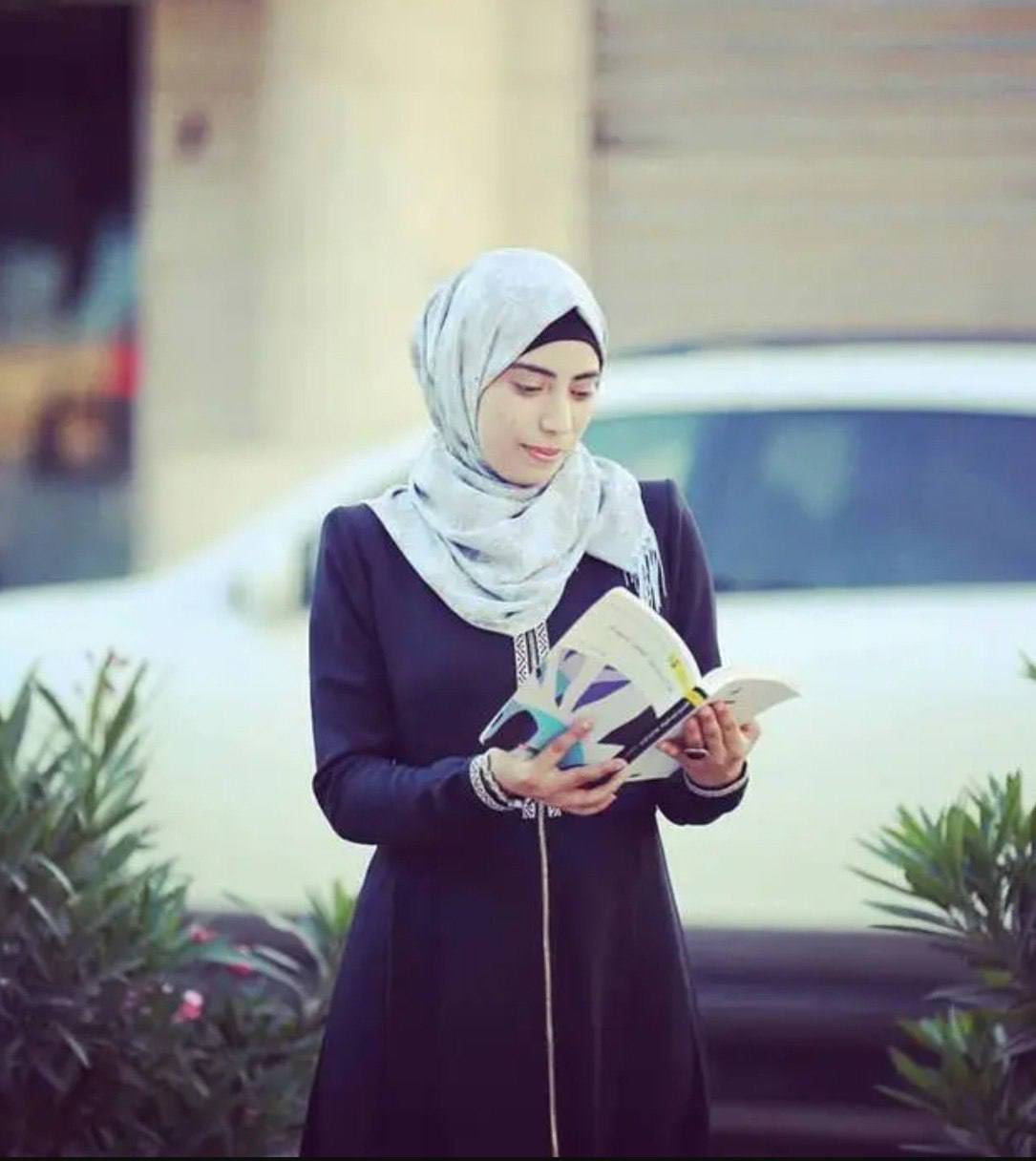
Hiba Abu Nada, a Palestinian novelist and poet, and winner of the Sharjah Prize for her novel Oxygen is Not for the Dead, was killed by Israeli airstrikes at her home in Gaza on Oct. 20. She was just 32 years old. The poem below, written by Angolan poet and journalist João Melo, alerts us to the brevity and precarity of the moment, after an act of violence occurs and before the official narrative of that violence is written, how we are obliged to speak in that moment the truth and reality that we know.
Urgent: News of the Death of Hiba Abu Nada
João Melo
translated from the Portuguese by G. Holleran
Excuse my urgency, oh right-thinking beings
especially you translucent
and self-referential poets,
but one of our sisters,
the Palestinian poet Hiba Abu Nada,
has just died in Gaza under the shrapnel of a benevolent bomb,
sent by another God,
different from the one she spoke with
every day.
I hesitated to convey this fateful news
so hastily. Perhaps I should wait
for the leaden grey smoke from the bomb that killed her to dissipate,
while she, surely,
scrutinized the sky for a sliver of light and
maybe even
the last birds.
Or, more convenient yet
it’d be better to say nothing,
until today’s hegemonic oracles,
like all oracles,
circulate an official statement
denying it as usual
without any doubts
or uncomfortable questions.
But when I read
the last words of Hiba Abu Nada before she died,
I was moved to spread this news,
before her banner could be censored
by those who defend selective liberty:
“If we die, know that we are content and steadfast,
and convey on our behalf that we are people of truth!”
João Melo, born in 1955 in Luanda, Angola, is an author, journalist, and communication consultant. He is a founder of the Angolan Writer’s Association, and of the Angolan Academy of Literature and Social Sciences. His works include poetry, short stories, articles, and essays and have been published in Angola, Portugal, Brazil, Italy, Cuba, the United Kingdom, and the United States. His writings have been translated into English, French, German, Arabic, and Chinese. He was awarded the 2009 Angola Arts and Culture National Prize in the literature category.
Grace Holleran is a writer, translator, and member of Barricade‘s editorial collective.
Get Involved
To read Barricade’s statement in solidarity with Palestine in response to the last escalation by Israel in 2021, click here.
For updates on local actions and demonstrations, we recommend checking the social media of local Palestinian advocacy organizations. For on-the-ground coverage in Gaza, we recommend Middle East Eye, Jewish Voice for Peace, and Motaz Azaiza. A list of other Instagram accounts can be found in the caption of this post. While social media gives visibility to the immediacy of the conditions in Gaza not shown in mainstream media, these accounts are also subject to censorship by Meta, so watch this space for updated links.
Some useful resources for education on Palestine’s history are Jadaliyya’s comprehensive reading list from 2021 and their currently-running Gaza Teach-in series (which can be accessed here along with other recent posts on Palestine), and Decolonize Palestine.
Country of Words is a rich resource for Palestinian literature, a re-mapping of Palestine’s literary history from a global perspective.
If you have the resources, consider donating to the Palestine Children’s Relief Fund, Medical Aid for Palestine’s urgent appeal, and Pal Legal (which gives protections to those losing their livelihoods for speaking out).
We urge readers in the United States to call and write their Congress representatives and demand they stand for a ceasefire.